
The Ethics of Digital Learning: Raising Responsible and Mindful Digital Citizens
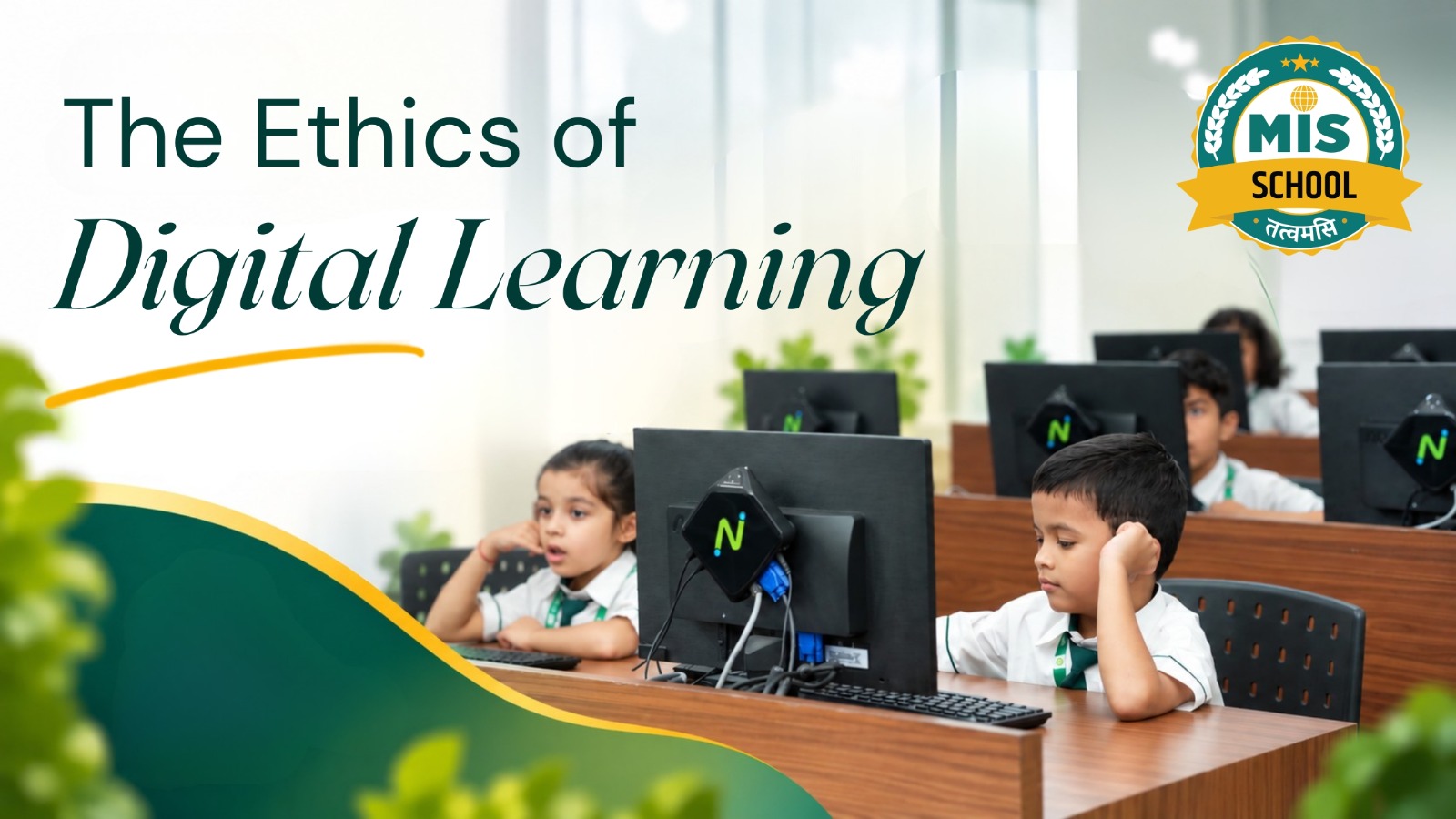
In today's connected world, children are growing up surrounded by screens, smart devices and digital platforms. From online classes and educational videos to digital games and social interactions, technology has become a natural part of childhood. At MIS School Hinjawadi, digital learning is viewed not simply as access to technology, but as an opportunity to develop curious, responsible and thoughtful learners. For parents of children from Nursery to Grade 8, the goal is not to keep children away from technology, but to help them learn how to use it wisely.
What Does It Mean to Be a Responsible Digital Citizen?
Digital citizenship begins with understanding that our behaviour online matters just as much as our behaviour offline. Children need to learn that kindness, honesty, respect and responsibility apply to digital spaces too.
For younger children, this may mean learning not to share personal information, asking a parent before accessing unfamiliar content and understanding that not everything they see online is true. Older children can gradually learn about digital footprints, online privacy, cyberbullying, plagiarism, misinformation and respectful online communication.
These lessons are an important part of life skills education because they prepare children to make thoughtful decisions in an increasingly digital world.
Teaching Mindful Use of Technology
For parents, one of the biggest challenges is finding a healthy balance between screen time and other experiences. Digital learning should complement childhood, not replace it.
Children need opportunities to read books, play outdoors, participate in sports, create art, interact with family and friends, and simply explore their surroundings. Such experiences support emotional, physical and social development alongside academic growth.
Parents can encourage mindful technology habits by setting age-appropriate boundaries, creating screen-free family time and discussing what children are learning or watching online. Instead of asking only, “How long were you online?”, try asking, “What did you learn?” or “How did that make you feel?” These conversations encourage reflection and critical thinking.
Digital Learning Should Build, Not Replace, Curiosity
Technology becomes most meaningful when children actively engage with it. A digital activity that encourages research, creativity, collaboration or problem-solving can become an extension of experiential learning.
At MIS School Hinjawadi, the integration of technology, computer labs, STEAM learning and activity-based pedagogy supports children in connecting concepts with real-world applications. The aim is to help learners become confident users of technology while developing communication, creativity, analytical thinking and problem-solving skills.
For children in Nursery and the early grades, this may begin with guided exploration and age-appropriate digital activities. As children move towards the middle school grades, they can be encouraged to evaluate online information, research responsibly and use technology creatively rather than consuming content passively.
Parents and Schools: Partners in Digital Citizenship
Children learn digital behaviour not only through instructions but also through observation. Parents can model responsible technology use by practising respectful online communication, protecting personal information and demonstrating when to put devices away.
Schools and families can work together to reinforce the same values empathy, integrity, self-discipline, respect and responsibility. When these values become part of everyday learning, children are better equipped to navigate the digital world with confidence.
Ultimately, digital literacy is not just about knowing how to use a device. It is about knowing when, why and how to use technology responsibly. By combining technology with holistic education, life skills, values and experiential learning, MIS School Hinjawadi strives to nurture learners who are not only digitally capable but also compassionate, ethical and responsible global citizens.